
 Cart is empty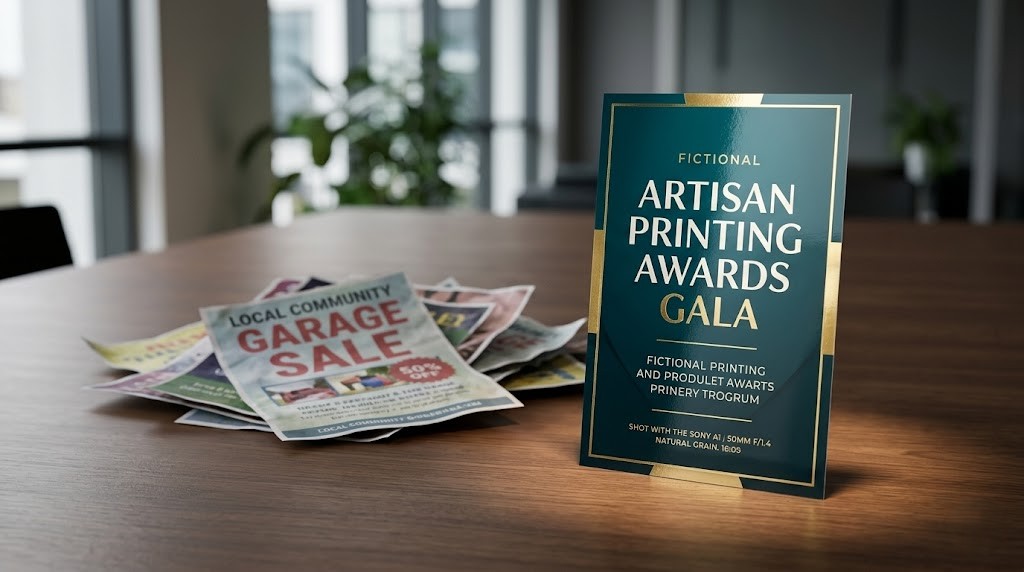
You spent time designing a flyer, paid to have it printed, and distributed it across Niagara — and the phone barely rang. The design looked fine. The offer was clear. So what went wrong?
More often than not, the answer isn’t the message. It’s the medium. The wrong size makes your flyer invisible in a stack. The wrong paper makes it feel cheap before the reader even processes your offer. The wrong finish makes it unreadable under certain lighting. These are silent conversion killers that most Niagara businesses never think about — until it’s too late.
Whether you’re printing business cards, marketing brochures, or large-format materials, understanding offset versus digital printing empowers you to make informed decisions. Let’s break down both methods so you can confidently choose the approach that best serves your project.

Who This Guide Is For
This guide is written for Niagara business owners, marketing coordinators, event organisers, real estate professionals and community organisations who use printed flyers to drive foot traffic, bookings or awareness — and want to make every print run count.
Whether you run a restaurant in Niagara Falls, manage open house marketing for a real estate brokerage, or promote community events across St. Catharines and Fort Erie, the decisions you make about flyer size, paper stock and finish directly determine how your audience responds.

The Real Problem With Most Business Flyers
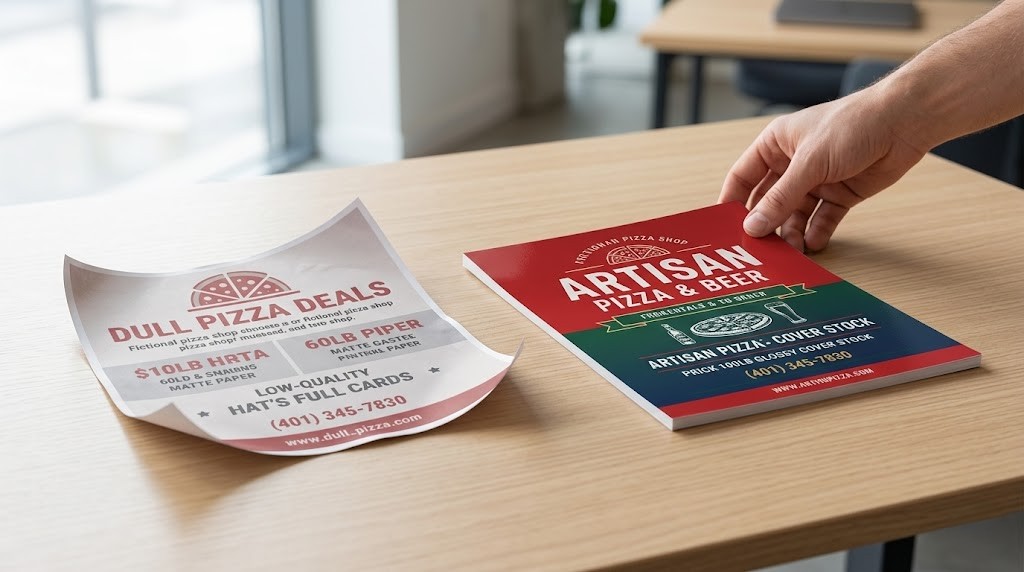
Most businesses treat flyer printing as a commodity decision — pick the cheapest option, get the most copies, distribute and hope. This approach consistently underdelivers.
According to the Print Industries Market Association, print marketing still delivers higher retention rates than digital — readers recall printed material more reliably than screen-based ads. But that retention only activates when the physical quality of the print matches the quality of your message.
In a competitive local market like Niagara — where businesses are competing for the same foot traffic, events and community attention — a well-produced flyer doesn’t just inform. It signals credibility, professionalism and that your business takes its brand seriously.
The sections below break down every key decision in flyer printing so you can make the right call before your next print run.
Flyer Size — Matching Format to Purpose
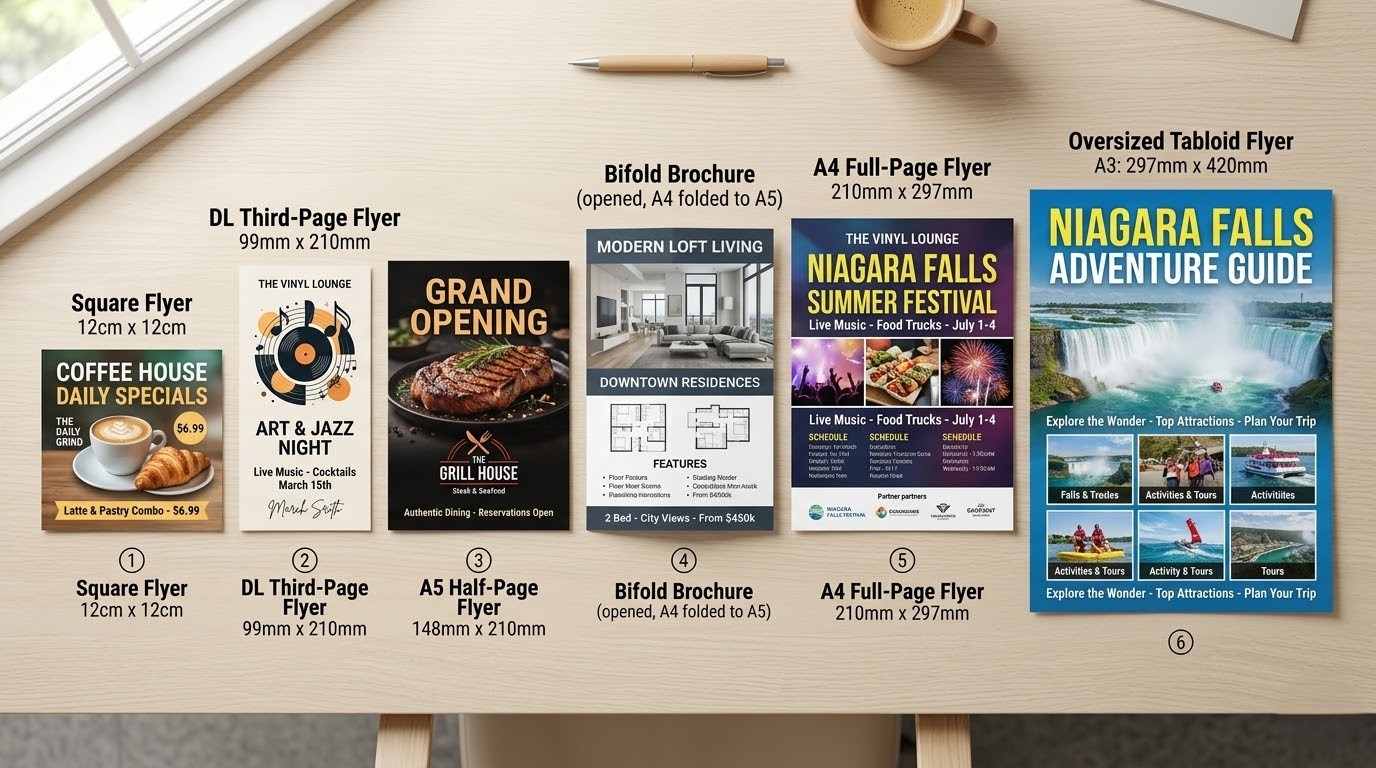
Size is the first decision and one of the most strategically important. Different flyer sizes perform differently depending on where they’re displayed, how they’re distributed and who’s reading them.
| Flyer Size | Dimensions | Best Used For |
|---|---|---|
| Half Page (A5) | 5.5″ × 8.5″ | Handouts, mailbox drops, counter displays |
| Full Page (A4 / Letter) | 8.5″ × 11″ | Bulletin boards, information packages, B2B |
| DL (Third Page) | 3.9″ × 8.3″ | Rack displays, restaurant tables, event programs |
| Bifold Brochure | 8.5″ × 11″ folded | Multi-service businesses, real estate listings |
| Square | 5″ × 5″ or 6″ × 6″ | Social-media-aligned campaigns, premium brand feel |
| Oversized | 11″ × 17″ (tabloid) | Trade shows, store windows, event announcements |
The most common mistake:
Choosing full-page (A4) by default when half-page (A5) would work better. A5 flyers cost less per unit, fit more naturally in hands and bags and are far more likely to be kept. For restaurant promotions, open house announcements and event handouts across Niagara, A5 is frequently the smarter choice.
For real estate professionals
brochure format lets you present property details, photography and contact information in a way that feels premium without requiring a large format. Niagara’s real estate teams consistently find that well-produced listing materials influence buyer perception before they ever step inside a property.
Paper Stock — Why It Matters More Than You Think
When a potential customer picks up your flyer, their hands tell them something about your business before their eyes finish reading. Thin, flimsy paper signals a low-investment offer. Sturdy, well-weighted stock signals confidence and quality.
Understanding Paper Weight
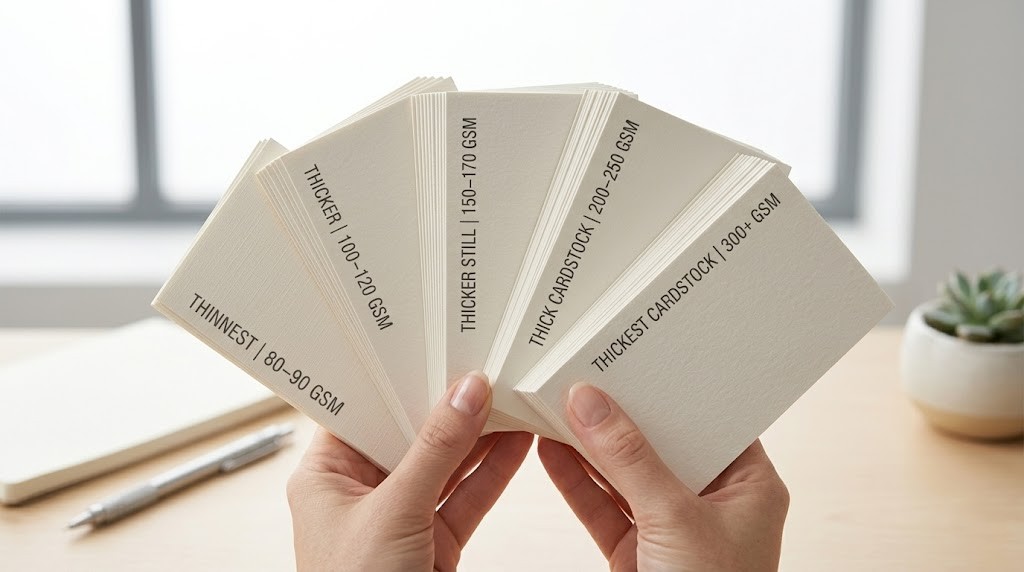
Paper weight is measured in grams per square metre (GSM) in Canada:
| GSM Range | Feel | Best Application |
|---|---|---|
| 80–90 GSM | Thin, standard office paper feel | Internal documents, high-volume informational drops |
| 100–120 GSM | Slightly more substantial | General business flyers, everyday promotions |
| 150–170 GSM | Solid, professional feel | Marketing flyers, event promotions, menus |
| 200–250 GSM | Card-like, premium | Business cards, premium flyers, real estate materials |
| 300+ GSM | Rigid card stock | Postcards, loyalty cards, invitations |
For most Niagara business marketing flyers, 150–170 GSM is the sweet spot — professional without being unnecessarily costly.
Coated vs Uncoated Paper
Coated paper
has a smooth surface treatment that makes colours appear sharper and more vibrant — ideal for image-heavy flyers promoting restaurants, events or properties
Uncoated paper
has a natural, textured feel — better for text-heavy informational content or brands that want an organic, artisan aesthetic
If your flyer features strong photography — a food image, a property exterior, an event highlight — coated paper is the right call. According to Printing Industries of America, colour accuracy and vibrancy is one of the top factors influencing perceived brand credibility in printed materials.
Finish — The Detail That Separates Good From Great
Once you’ve chosen your size and paper, the finishing treatment is what elevates a standard flyer into a memorable brand touchpoint.
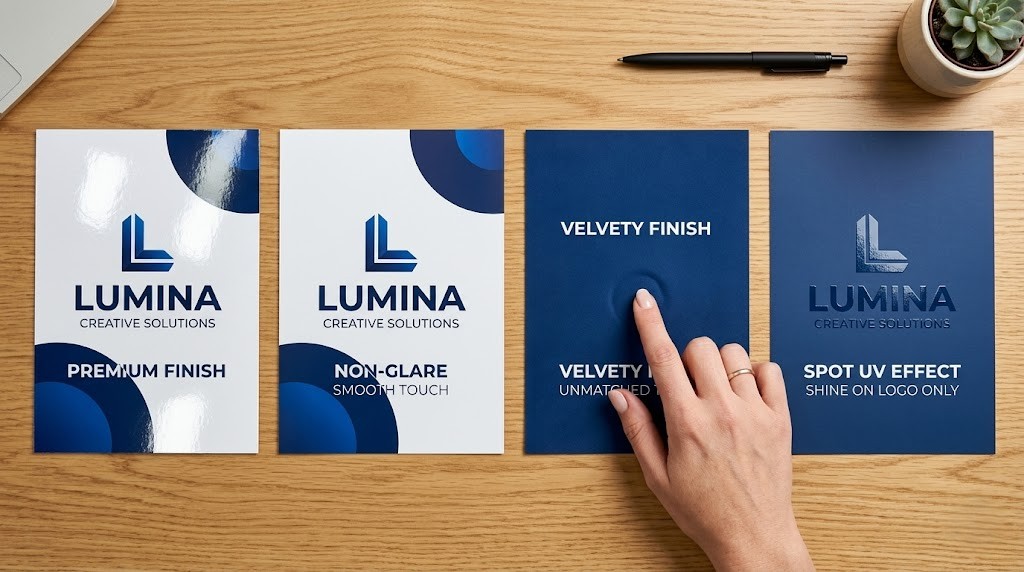
| Finish Type | Appearance | Best For | Avoid When |
|---|---|---|---|
| Gloss Laminate | Shiny, reflective, vibrant colours | Photography-heavy, bold designs | Text-heavy — can cause glare |
| Matte Laminate | Flat, sophisticated, non-reflective | Premium brands, elegant designs | Bright colour promotions |
| Soft-Touch Matte | Velvety, tactile, luxury feel | High-end real estate, premium services | Budget print runs |
| Spot UV | Selective gloss over specific elements | Logo highlights, accent details | Simple or minimalist designs |
| Unlaminated | Natural paper feel, writable surface | Coupons, forms, informational sheets | Anything with heavy photography |
The most overlooked finish mistake: Using gloss laminate on a flyer with small body text. Under certain lighting, gloss creates glare that makes text difficult to read — the exact opposite of what you want at a busy Niagara event or trade show display.
For restaurant and hospitality businesses like those across the Niagara region, matte laminate with spot UV on the logo is a combination that consistently performs — it feels premium, photographs well and makes the brand element pop without overwhelming the promotional content. Businesses like Tadka King and local Niagara hospitality venues use printed materials as a direct extension of their brand experience.
Matching Your Flyer Decisions to Your Business Type
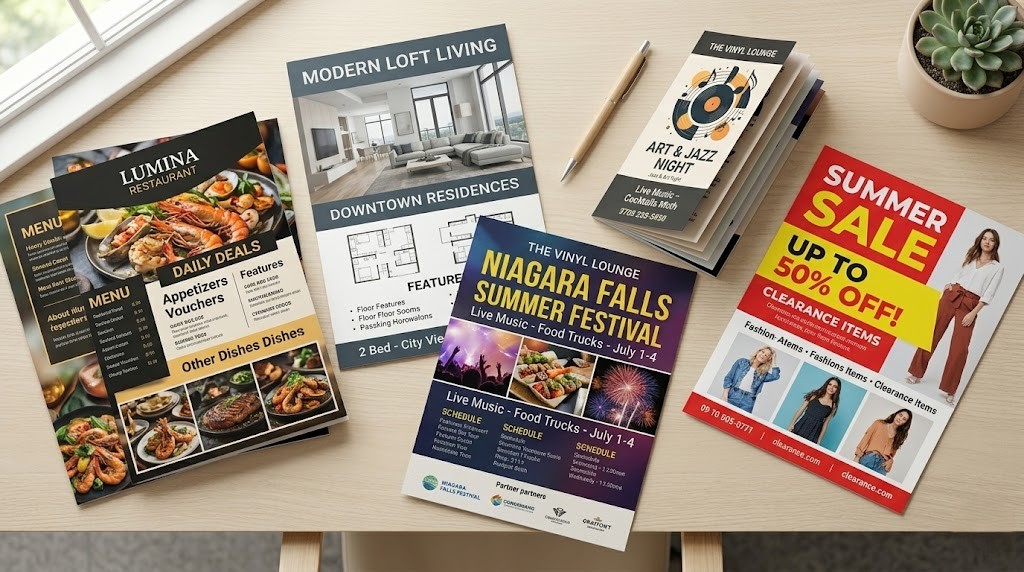
Different Niagara industries have different flyer needs. Here’s how to align your decisions to your specific context:
| Business Type | Recommended Size | Paper Weight | Finish |
|---|---|---|---|
| Restaurant / Food | A5 or DL | 150–170 GSM coated | Gloss or soft-touch matte |
| Real Estate | Bifold or A4 | 200–250 GSM coated | Soft-touch matte or spot UV |
| Retail / Events | A5 or A4 | 150 GSM coated | Gloss laminate |
| Professional Services | A4 or DL | 170 GSM coated | Matte laminate |
| Community / Non-Profit | A5 or A4 | 100–120 GSM uncoated | Unlaminated |
| Trade Shows | A4 or Oversized | 200 GSM coated | Gloss or matte laminate |
For businesses running open house events, real estate teams across Niagara benefit from pairing their printed flyer materials with professional photography and video — a combination that Arha Production delivers for listing campaigns across the region.
Design Principles That Make Your Flyer Convert
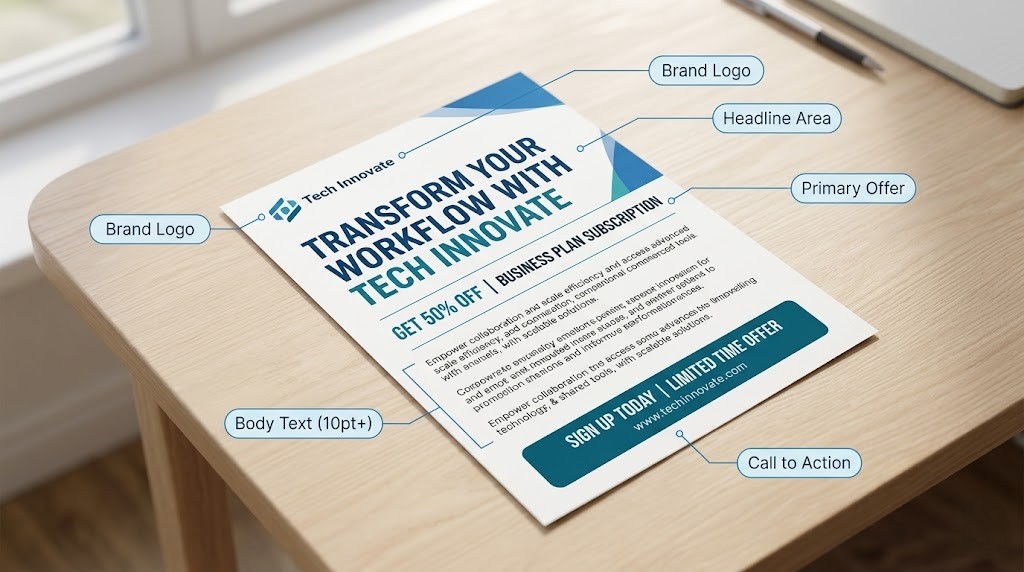
A technically perfect print job on a poorly designed flyer still underperforms. Here are the non-negotiable design principles for Niagara business flyers:
- One primary message per flyer — trying to communicate five things communicates nothing
- Your offer above the fold — the top third of your flyer is prime real estate; your value proposition must live there
- Legible body text — minimum 10pt font for body copy; 8pt is too small for most print formats
- Clear call-to-action — phone number, website or QR code must be immediately visible
- Brand consistency — your flyer should use the same fonts, colours and tone as your other business materials
For businesses that also need digital brand alignment, Beehive360 provides integrated branding and marketing support that keeps print and digital materials consistent.
How Niagara Print Express Approaches Flyer Quality
At Niagara Print Express, we work with businesses across the Niagara region — from Fort Erie to St. Catharines — to ensure their printed materials represent their brand accurately and perform in the real world.
Our team understands the specific environments where Niagara businesses distribute their flyers: outdoor community events, restaurant counters, real estate open houses, mailbox drops in established and growing neighbourhoods. Each of those contexts has different durability, readability and presentation requirements — and we factor those in when advising on paper and finish selections.
We also support businesses that need custom printing solutions beyond standard flyers — including banners, yard signs and business cards — giving you a single local source for all your print marketing needs.
Ready to Print Flyers That Actually Work for Your Niagara Business?
Our team understands what works in the Niagara market — from paper selection to finish to format. Let’s make sure your next print run delivers the response your business deserves.
Get in Touch With Our Team → niagaraprintexpress.ca
Written by the Niagara Print Express Team | Local print experts serving businesses across the Niagara Region.
Content is provided for informational purposes. For specific print recommendations tailored to your project, speak directly with our team.

We print almost everything!
Didn't find what you're looking for?
We print almost everything! Contact us for custom requests.
Frequently Asked Questions (FAQs)
What is the most popular flyer size for Niagara businesses?
A5 (half page, 5.5" x 8.5") is the most commonly requested flyer size for local businesses. It's cost-effective, easy to distribute and the right proportion for most promotional messages. Full-page A4 is preferred for information-heavy content or bulletin board displays.
Does paper weight actually affect how customers perceive my business?
Yes, significantly. Research from the Two Sides North America consumer print trust study shows that heavier paper stock is associated with higher brand credibility and perceived quality. For first impressions, 150–170 GSM coated is the professional standard for Niagara business marketing.
Is gloss or matte better for flyers with a lot of photography?
Gloss laminate makes photography look more vivid and saturated — ideal for food, events and real estate imagery. Matte laminate works better for text-heavy flyers and premium brand aesthetics. If your flyer has both strong imagery and detailed text, soft-touch matte is often the best compromise.
Can I get flyers printed that match my existing business cards and banners?
Yes. Colour consistency across print materials requires calibrated equipment and matching colour profiles (CMYK). At Niagara Print Express, we ensure brand colour accuracy across all your business card printing and large-format materials so your brand looks consistent at every touchpoint.
What file format should I provide for flyer printing?
PDF is the preferred format — specifically a print-ready PDF with bleed marks, crop marks and embedded fonts. High-resolution PNG or AI files are also accepted. Avoid sending Word documents or low-resolution JPEG exports as they produce inconsistent print results.
Should I use QR codes on my Niagara business flyers in 2026?
Absolutely. QR codes bridge print and digital effectively — they allow you to link directly to your website, booking page or social media profile. According to Statista Canada, QR code scanning in Canada has grown consistently since 2020. Keep the QR code large enough to scan easily (minimum 1" x 1") and test it before printing.
How many flyers should I print for a Niagara event or campaign?
This depends entirely on your distribution method and target area. For a mailbox drop in a single Niagara neighbourhood, 500–1,000 copies is a reasonable starting point. For trade shows or event handouts, 200–500 is typically sufficient. We recommend starting with a focused run, measuring response and scaling from there rather than over-printing on a first campaign.
Do you offer design services for businesses that don't have a flyer template?
Yes. Our team at Niagara Print Express can assist with design guidance or connect you with design resources to ensure your file is print-ready. For businesses needing full brand and marketing packages including digital alignment, antrepreneur.ca provides integrated brand services across Niagara.

Shadab Alam
Shadab Alam is an entrepreneur and co-founder of NPE, specializing in print marketing, branding, and business growth strategies. With experience in building and scaling business initiatives, he focuses on helping companies use high-quality printed materials and creative marketing to strengthen their brand presence.
Add a Comment