
 Cart is empty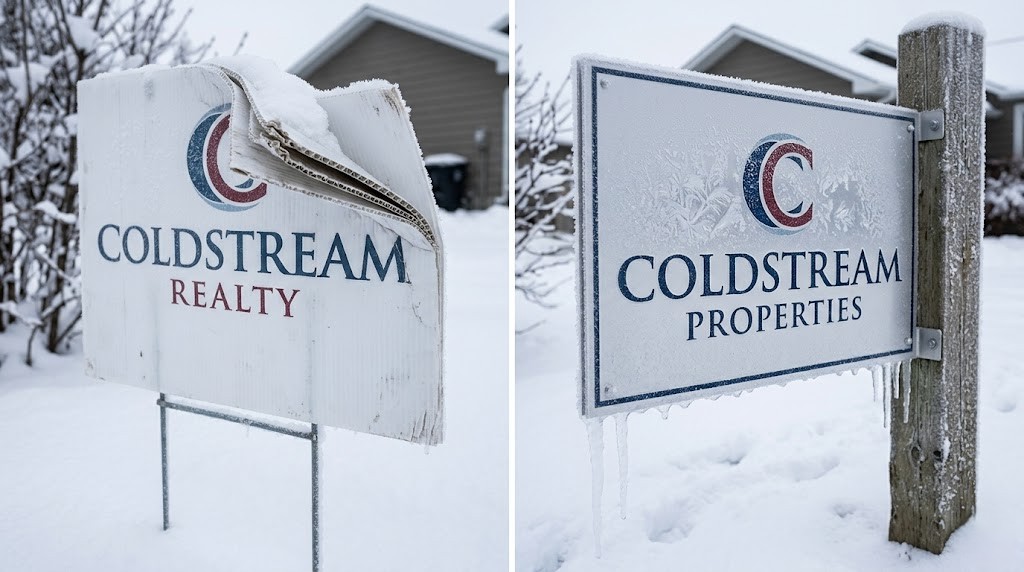
Introduction
You just listed a property in Pelham in November. The sign goes up Friday. By Monday, there has been a freeze-thaw, 40 km/h winds off the Escarpment, and a light snowfall. Is your coroplast sign still standing — or has it warped, cracked, or blown three doors down?
Coroplast and aluminum each dominate different use cases. The wrong choice means replacing signs mid-listing — or showing up to an open house with a bent, faded board in front of a $700,000 property. This guide gives you the honest breakdown.
Niagara’s climate is uniquely punishing for outdoor signage. Freeze-thaw cycles, lake-effect snow near Niagara Falls, high winds along the Escarpment, and intense UV reflections off snow all affect how long your real estate sign actually lasts in the ground.
What Are Coroplast and Aluminum Signs?
Coroplast (Corrugated Plastic)
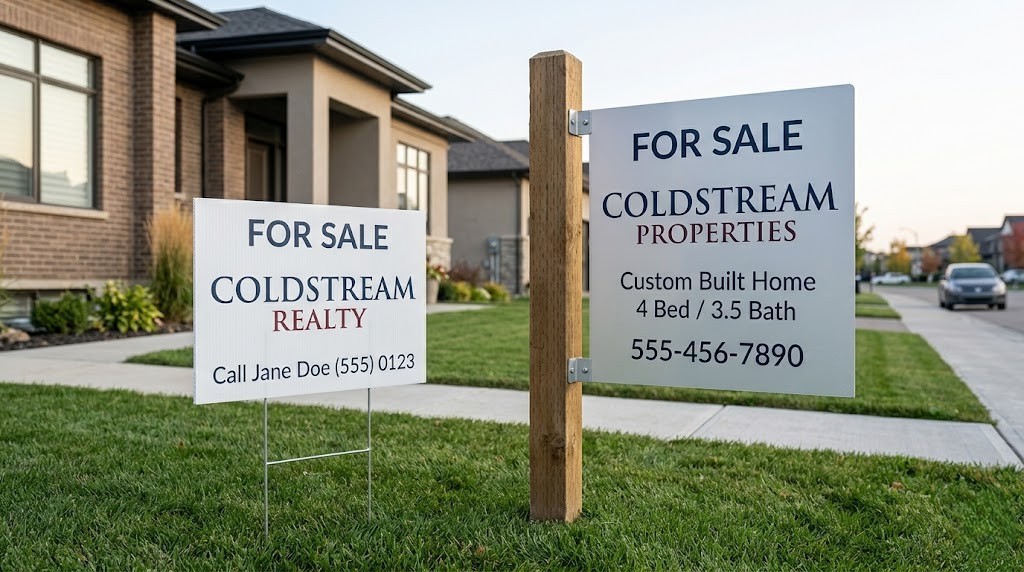
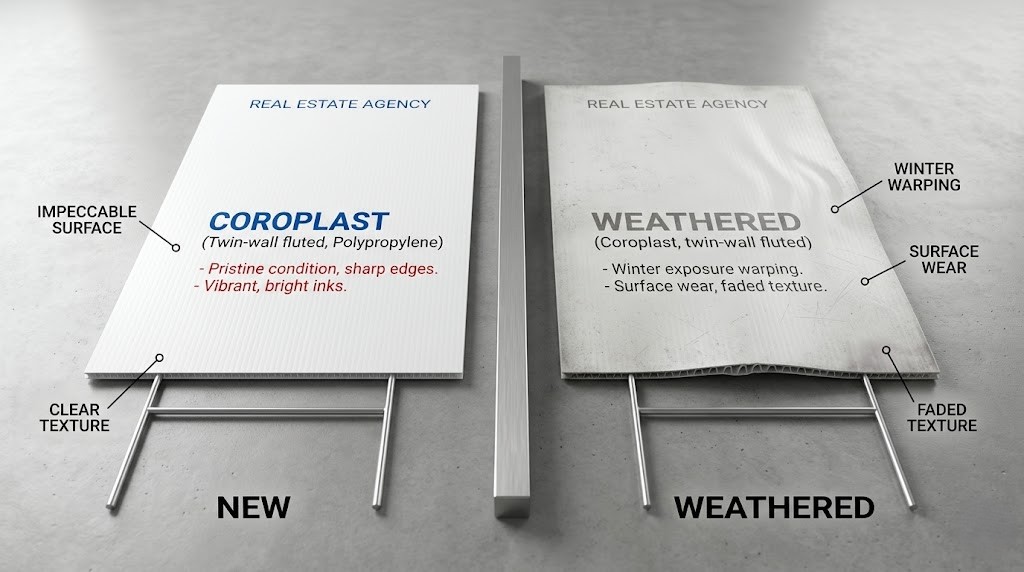
A twin-wall fluted polypropylene sheet — think cardboard construction, but plastic. Lightweight, easy to install with H-frame wire stakes, and printed in full colour with UV-resistant inks.
- Cost: Low ($15–$40 per sign)
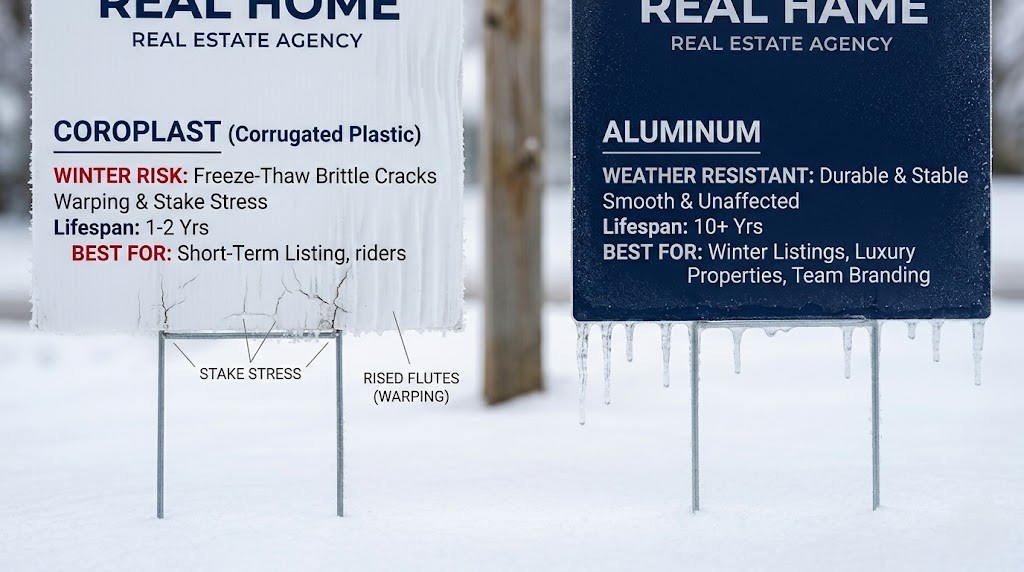
- Lifespan: 1–2 years outdoors
- Best for: Short-term listings, riders, directional signs, open house signs
Aluminum (Metal Sign Panel)
A rigid, smooth metal sheet — rust-proof, UV-resistant, and structurally stable in wind and temperature extremes. Standard for permanent and semi-permanent real estate installations.
- Cost: Higher ($50–$150 per sign)
- Best for: Winter listings, post-mounted signs, team branding, luxury properties
- Best for: Short-term listings, riders, directional signs, open house signs

Head-to-Head Comparison: Coroplast vs. Aluminum
| Factor | Coroplast | Aluminum | Niagara Winter Winner |
|---|---|---|---|
| Upfront Cost | Low ($15–$40) | Higher ($50–$150) | Coroplast |
| Outdoor Lifespan | 1–2 years | 5–20 years | Aluminum |
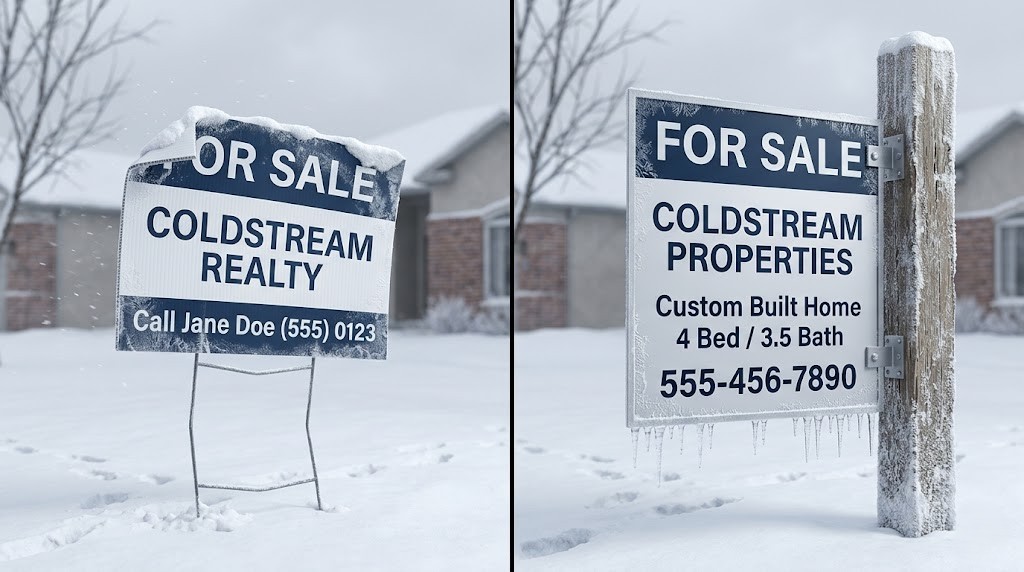
| Freeze-Thaw Resistance | Becomes brittle in extreme cold | Unaffected | Aluminum |
| Wind Resistance | Lightweight, can blow away | Rigid, holds firm | Aluminum |
| Snow / Moisture | Waterproof but flutes trap water | Fully sealed surface | Aluminum |
| Print Quality | Flute texture visible on light colours | Smooth, crisp finish | Aluminum |
| UV Resistance | Good (with UV inks) | Excellent (metal base) | Aluminum |
| Installation | Fast (H-frame wire stakes) | Requires post/frame mount | Tie |
| Long-Term Cost / Year | Higher (frequent replacement) | Lower (rare replacement) | Aluminum |
Niagara Winter: The Local Factors That Change Everything
Generic sign guides do not account for Niagara’s specific climate challenges. Here is what actually matters when your signs go out in October and need to still look professional in March.
Freeze-Thaw Cycles
Niagara averages 70+ freeze-thaw days annually. Each cycle stresses coroplast’s fluted structure, causing micro-cracks, warping, and eventual brittleness at stake insertion points. Aluminum is completely unaffected by temperature cycling.
Escarpment Winds
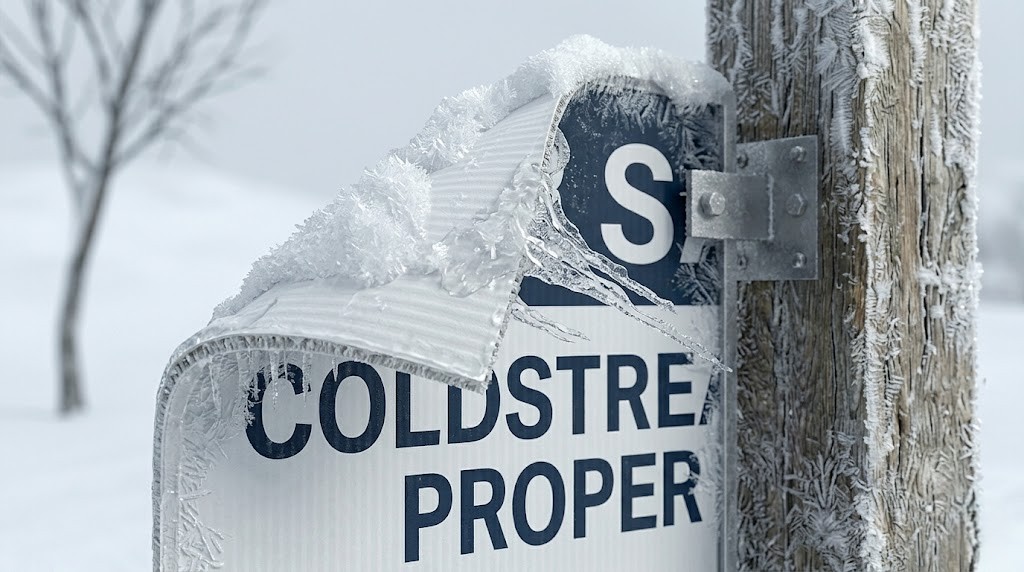
Wind gusts of 60–80 km/h are common along the Niagara Escarpment (Pelham, Fonthill, Grimsby). Lightweight 4mm coroplast on wire stakes is a flight risk. Aluminum on post frames holds firm in sustained wind.
Lake-Effect Snow
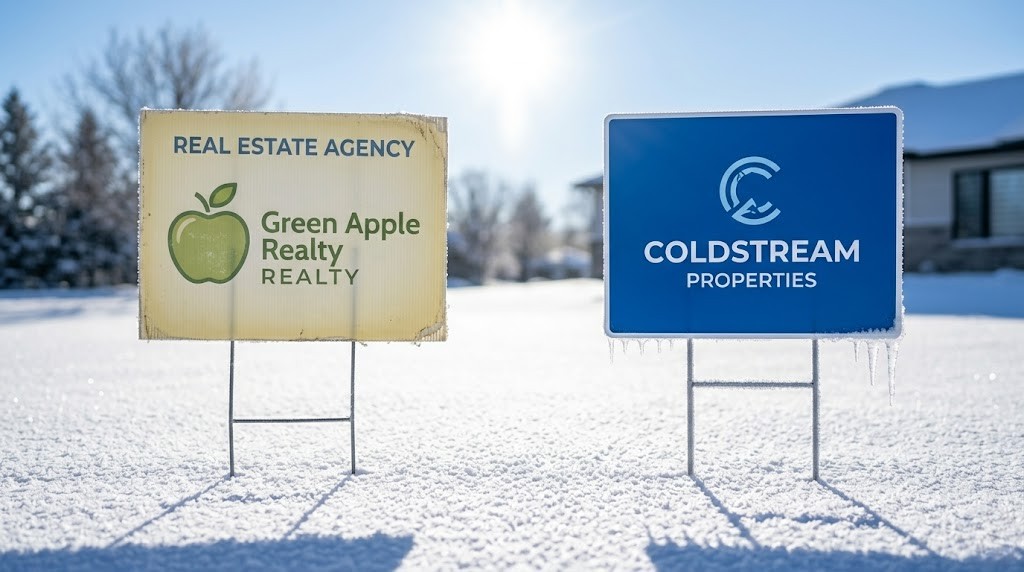
Niagara Falls and Fort Erie receive heavy lake-effect snow events. Snow build-up on coroplast panels can cause sag or bending. Aluminum’s rigid structure prevents this entirely.
UV Reflection off Snow
Snow amplifies UV exposure significantly. Coroplast — especially white panels — can yellow and fade faster during winter-adjacent seasons (March–April). Aluminum holds colour integrity through multiple seasons.
Which Should You Choose?
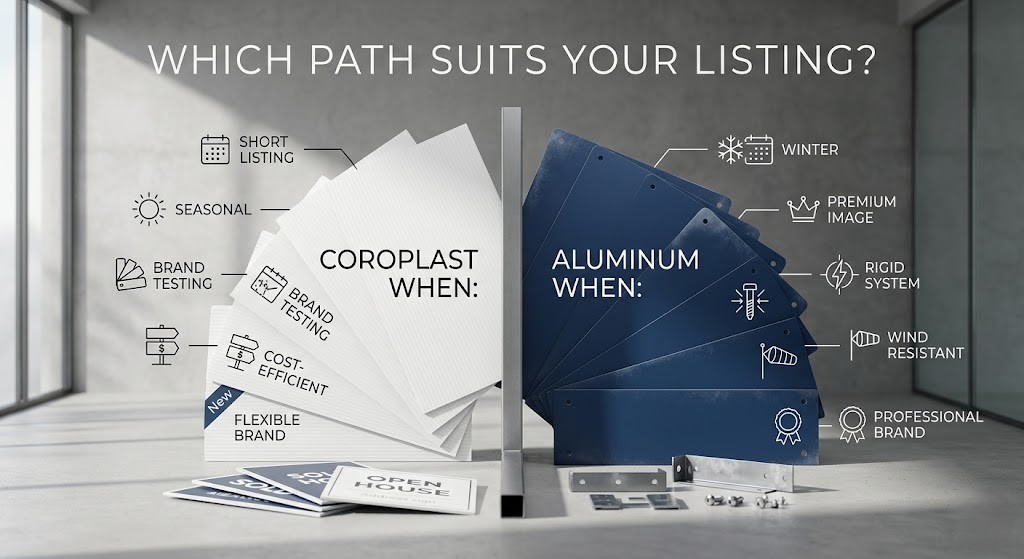
Choose Coroplast When:
- Listing is priced to sell quickly (30–90 day target)
- Spring or summer listing (minimal winter exposure)
- High volume of listings (cost-per-sign matters)
- Temporary riders: OPEN HOUSE, SOLD, PRICE REDUCED
- New agents testing brand layouts before committing
- Address-specific signs that change with every listing
- Budget-conscious brokerage or team printing
Choose Aluminum When:
- Listing expected to run through winter (October–March)
- Luxury or premium property (image matters)
- Post-mounted sign system (rigid panel required)
- Team/brokerage branding sign (reused across listings)
- Rental property or commercial listing (long outdoor exposure)
- Location with heavy wind: Pelham, Escarpment areas, lakeside properties
- Realtor building a polished, professional brand identity

The Real Cost Breakdown Over Time
| Scenario | Coroplast Cost | Aluminum Cost | Better Choice |
|---|---|---|---|
| Single listing, 60 days, spring | ~$25 (one-time) | ~$80 (one-time) | Coroplast |
| Single listing, 6 months, winter | ~$50 (2 replacements) | ~$80 (one panel) | Aluminum |
| 10 listings/year, 3 years | ~$750 (annual replace) | ~$200 (reusable set) | Aluminum |
| Team branding post sign system | Not suitable | Ideal | Aluminum |
The tipping point: if you run more than 6 listings per year or need signs to last through even one Niagara winter, aluminum pays for itself quickly.
Many Niagara realtors use a hybrid approach: aluminum for the main listing board, coroplast for directional riders and open house signs.
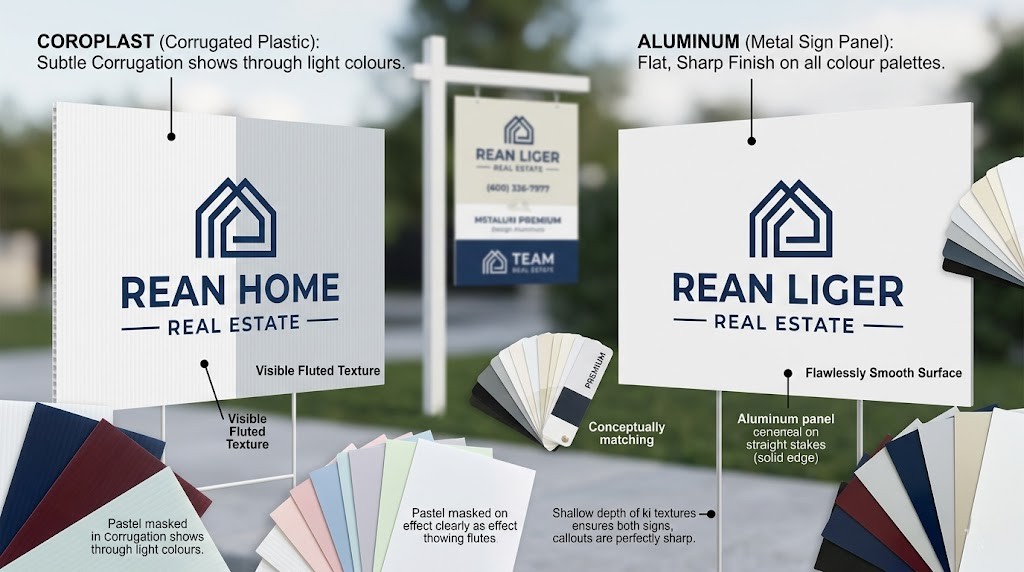
Print Quality: Does It Actually Look Different?
Yes — especially at close range. Coroplast’s fluted structure creates subtle corrugation that shows through on large areas of white, light grey, or pastel brand colours. Darker colours and bold graphics mask it well.
Aluminum’s smooth surface delivers a flat, print-sharp finish across any colour palette — which matters when your branding is part of your market positioning.
For premium listings or team branding with light-coloured designs, aluminum is the professional choice. For bold, dark-coloured listings or standard MLS signage, quality coroplast with UV printing looks excellent and performs well for the listing period.
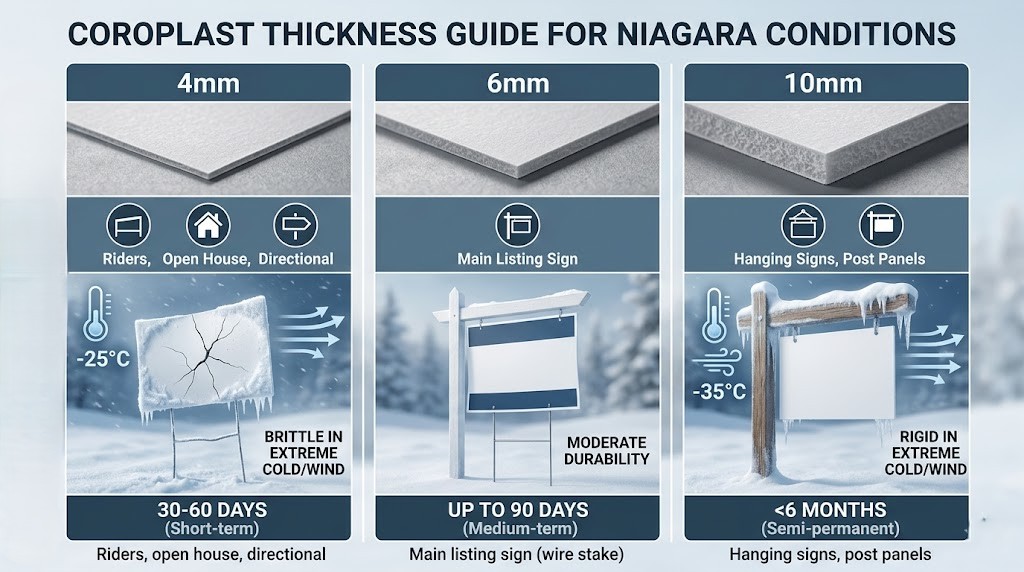
Coroplast Thickness Guide for Niagara Conditions
| Thickness | Best For | Winter Durability | Use Case |
|---|---|---|---|
| 4mm | Short-term (30–60 days) | Low in extreme cold/wind | Riders, open house, directional |
| 6mm | Medium-term (up to 90 days) | Moderate | Main listing sign (wire stake) |
| 10mm | Semi-permanent (less than 6 months) | Good | Hanging signs, post panels |
Order Same-Day Real Estate Signs in Niagara
Niagara Print Express offers same-day coroplast and aluminum sign printing for realtors across St. Catharines, Niagara Falls, Welland, Pelham, and Thorold.
Order here: https://niagaraprintexpress.ca/real-estate-signs

We print almost everything!
Didn't find what you're looking for?
We print almost everything! Contact us for custom requests.
Frequently Asked Questions (FAQs)
What is coroplast and why is it used for real estate signs?
Coroplast is a corrugated plastic sheet — lightweight, affordable, and waterproof. It is the most popular choice for short-term real estate listing signs in Canada, with an outdoor lifespan of 1–2 years.
Do coroplast signs survive Niagara winters?
Coroplast handles moderate winter conditions but can become brittle in extreme freeze-thaw cycles. Heavy snow can warp fluted panels, and Escarpment winds can blow away 4mm signs. 6mm or 10mm coroplast is recommended for extended winter use in Niagara.
How long do aluminum real estate signs last outdoors?
Aluminum signs last 5–20 years outdoors. They are rust-proof, wind-resistant, and maintain colour integrity through multiple Ontario freeze-thaw cycles — ideal for team branding and permanent post systems.
Which is cheaper — coroplast or aluminum real estate signs?
Coroplast costs significantly less upfront and is ideal for single-listing use. Aluminum costs 2–4x more initially but lasts 5–10x longer, making it more cost-effective for realtors with multiple listings or multi-season needs.
Can I get same-day real estate sign printing in Niagara?
Yes. Niagara Print Express offers same-day coroplast and aluminum sign printing for realtors across St. Catharines, Niagara Falls, Welland, Pelham, and Thorold.
What coroplast thickness is best for Niagara winter real estate signs?
4mm is standard for short-term listings. 6mm is recommended for winter listings. 10mm provides maximum rigidity for hanging or post-mounted panels in wind-exposed Niagara locations.
Which sign material is better for a long listing period?
For listings running through a full winter season (October–March), aluminum is the better choice. Coroplast may show wear, fading, or warping after prolonged exposure to Niagara's freeze-thaw cycles and winds.
Do real estate signs need UV-resistant printing?
Yes. Both coroplast and aluminum signs should be printed with UV-resistant inks. Snow amplifies UV reflection significantly in winter, accelerating fade on standard inks. Niagara Print Express uses UV-resistant printing on all outdoor signage.
What are standard real estate sign sizes in Ontario?
Standard sizes: 18x24 inches (riders/lawn signs), 24x36 inches (main property signs), 48x24 inches (team post signs). Always check municipal sign bylaws in St. Catharines, Niagara Falls, Welland, and Pelham.
Is aluminum better than coroplast for post-mounted real estate signs?
Yes. Aluminum is strongly preferred for post-mounted signs — it is rigid, holds mounting hardware properly, and resists wind flex. Coroplast panels on post systems can warp or buckle under sustained pressure.
Can coroplast signs be reused between listings?
Only if fully branded without a property address and in good condition. Generic coroplast riders (OPEN HOUSE, SOLD) can be reused. Address-specific signs are typically single-use.
Where can I print real estate signs near St. Catharines or Niagara Falls?
Niagara Print Express in Pelham, Ontario serves the entire Niagara Region with same-day and next-day sign printing for realtors, builders, and property managers — both coroplast and aluminum available.

Shadab Alam
Shadab Alam is an entrepreneur and co-founder of NPE, specializing in print marketing, branding, and business growth strategies. With experience in building and scaling business initiatives, he focuses on helping companies use high-quality printed materials and creative marketing to strengthen their brand presence.
Add a Comment